From Project Success to System Readiness
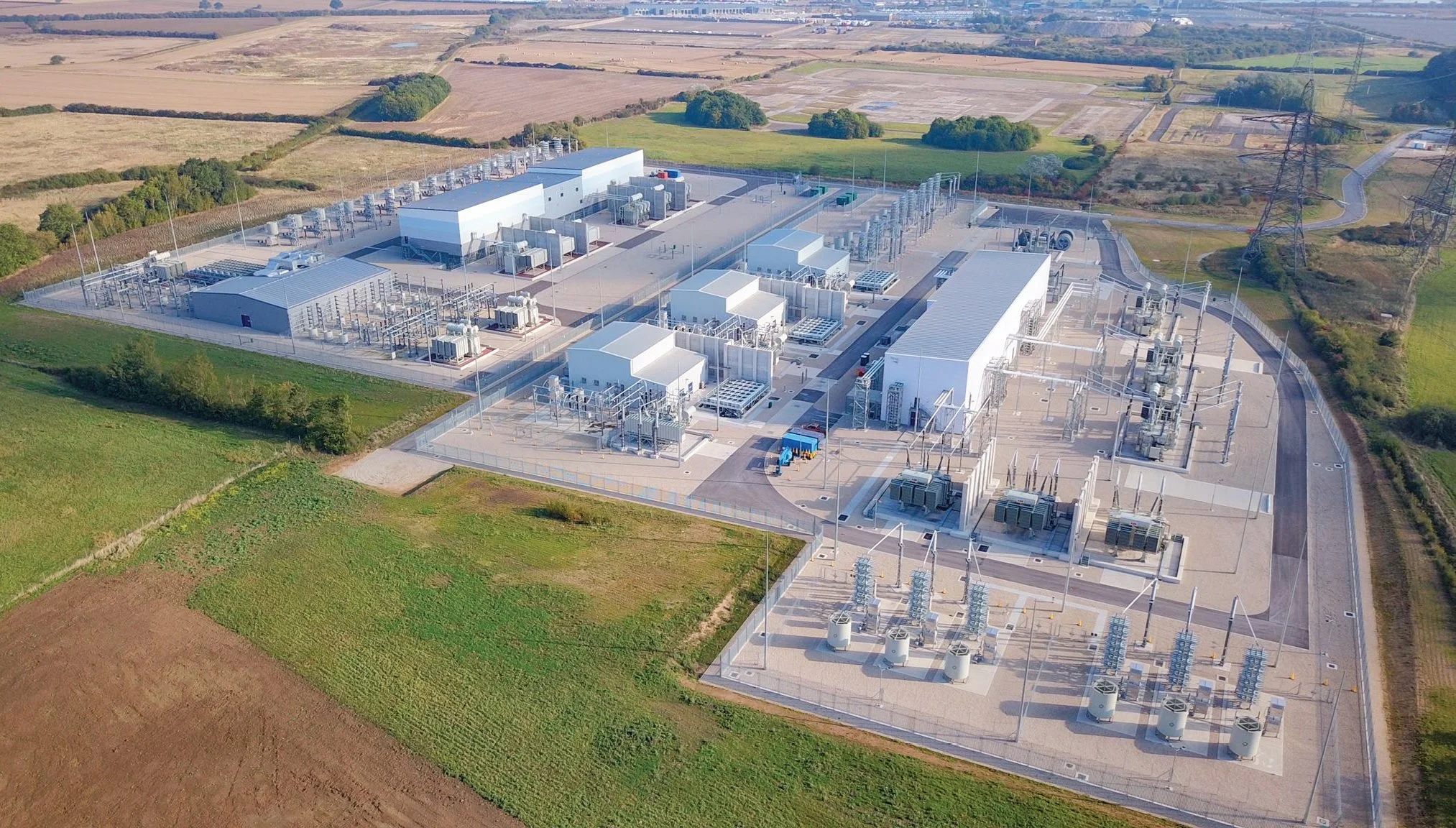
Completed onshore substations, Hornsea 2 (right) with Hornsea 1 (left).
The Constraint That Signals Growth, Not Failure
2021 was a year of tangible progress. Ørsted advanced major offshore wind projects under construction, expanded its onshore wind, solar, and storage footprint, and secured meaningful new capacity through tenders and auctions. The portfolio did what leaders ask portfolios to do. It grew. It diversified. It moved into new markets.
That growth also created a predictable side effect. As scale increases, the grid interface becomes more visible. Not because execution is weak, but because the operating environment is complex and still evolving. Regulatory pathways often run in parallel. Transmission planning is uneven across regions. Interconnection requirements vary by market. These are normal conditions for an industry moving from early build-out to sustained industrial delivery.
Here is the paradox. The better an organization becomes at winning and building projects, the more it must invest in systems that keep execution aligned. Scale rewards discipline. It also reveals where coordination needs to mature.
In our experience, this is the moment where leaders can choose a narrative. One story is that complexity is a headwind. The more useful story is that complexity is a signal. It tells you where to strengthen the system.
2021: Progress Across Offshore and Onshore
In offshore wind, Ørsted progressed two of the world’s largest projects under construction. Hornsea 2 in the UK advanced according to plan for most of the year. Greater Changhua 1 & 2a in Taiwan remained on its committed timeline. Both projects reflected an increasingly global delivery capability across very different grid and operating contexts.
At the same time, the pipeline expanded. Ørsted secured 4.5 GW of offshore wind capacity through tenders and auctions in 2021. In the US, Ocean Wind 2 in New Jersey and Skipjack 2 in Maryland added scale and momentum. In Poland, Baltica 2 & 3 were awarded, strengthening the European footprint through a partnership model.
Onshore also moved forward in meaningful ways. In Texas, Western Trail was commissioned and Permian Energy Center entered operation as a combined solar PV and storage facility. In Alabama, Muscle Shoals was commissioned, establishing an operating position in the US Southeast. In Europe, the acquisition of Brookfield Renewable Ireland established a platform for operating assets and future growth.
These outcomes matter for leaders beyond Ørsted. They show what is possible when an organization runs multiple technologies, multiple regions, and multiple delivery stages at once.
What 2021 Taught Us About Grid Connection
When portfolios expand, the grid connection does not behave like a single milestone. It behaves like a chain of dependencies that stretch across development, procurement, construction, commissioning, and operations.
In 2021, external conditions made those dependencies more visible. Cost inflation and supply chain constraints tightened the room for error. Cybersecurity became a design constraint for operational systems. Regulatory and policy environments continued to evolve, with different markets placing different responsibilities on developers, system operators, and public authorities.
This is the reality of building critical infrastructure at scale. The encouraging part is that leaders have more agency than they sometimes assume. The difference is not effort. It is how effort is organized.
The Shift That Unlocks Momentum: From Projects to Systems
By the end of 2021, a clear lesson emerged. Resilient delivery is less about pushing harder and more about strengthening the system that carries the work.
Five practices consistently support execution as portfolios scale.
1. Market realism as a strategic asset
Grid feasibility, regulatory maturity, and transmission outlook belong in market strategy discussions early. This reduces late-stage compression and protects portfolio choices.
2. Development integrity
Early grid concepts and compliance pathways should be treated as decision-grade inputs, not placeholders. Evidence builds confidence. It also preserves optionality.
3. Interface governance
Grid-code compliance and operator engagement perform best when they are structured as enterprise controls. Clear decision rights reduce ambiguity. Short escalation paths protect bandwidth.
4. Partner and supply shaping
Partnership models and supply conditions are not just commercial levers. They shape delivery resilience. Standardization where possible and clarity where necessary helps projects absorb volatility.
5. Lifecycle ownership
Grid integration does not end at energization. Commissioning behavior and operational readiness determine whether projects deliver the intended outcomes in real systems and real markets.
These practices do not add bureaucracy. They reduce friction. They also make execution feel calmer.
Risk Management Without Losing Momentum
2021 reinforced the value of deliberate risk management. Cost inflation and supply chain bottlenecks required attention. Cybersecurity demanded a stronger posture. Regulatory and policy landscapes continued to evolve.
The most effective response is not trying to eliminate uncertainty. It is designing governance that can absorb it. When risk is visible early, leaders can choose better trade-offs. When risk is surfaced late, leaders tend to spend time on rescue.
Teams that perform well under pressure do two things consistently. They separate facts from interpretations, and they protect their decision-making bandwidth by making escalation predictable.
What Leaders Can Do Next
The encouraging takeaway is practical. Leaders do not need a major reorganization to improve outcomes. They need repeatable routines that keep strategy and execution aligned.
Adopt a quarterly grid readiness audit.
Map regulatory, transmission, supply, and cybersecurity exposures against milestones. Treat it as a decision forum, not a reporting exercise.
Use stop, keep, start reviews at portfolio gates.
Stop carrying old assumptions forward. Keep the practices that reduce late surprises. Start insisting on evidence proportional to investment scale.
Make operator engagement intentional.
Treat system operator relationships as long-term assets. Document dependencies and decisions. Reduce ambiguity while the timeline still has options.
Extend ownership through early operations.
Align grid integration responsibilities through commissioning and initial operating behavior so the asset enters the system in a controlled, compliant way.
These are confidence-building moves. They restore clarity. They also create a healthier operating rhythm for teams.
2022: A Positive Outlook Grounded in Execution
As 2022 begins, the portfolio enters the year with momentum and clear line of sight on major milestones already communicated. Hornsea 2 is expected to be commissioned in the first half of 2022. Greater Changhua 1 & 2a is planned for commissioning in 2022. Onshore assets commissioned in 2021 provide a stronger operating base, while the expanded development footprint across regions supports future build-out.
The operating environment will remain demanding. Transmission constraints will not disappear overnight. Supply markets will stay tight. Cyber and regulatory expectations will continue to rise. Yet 2021 showed something important. When teams treat the grid interface as a system, not a handoff, execution becomes more predictable.
I come out of 2021 optimistic. Not because complexity is fading, but because the organization is learning how to carry complexity with discipline, partnership, and alignment. That is how sustainable growth is built.
